
Independent Deployments
Each platform could now be deployed independently, reducing coordination requirements between different websites.
YenDigital / Case Study
Modernizing a Shared Digital Platform into Independent Enterprise Ecosystems
Executive Summary
Many large enterprises initially build multiple websites on a shared digital platform to reduce infrastructure costs, accelerate development, and maximize reuse of common components. A shared platform can provide significant efficiency during the early stages, particularly when multiple websites have similar technical and functional requirements.
However, as individual business units evolve, the same shared architecture can introduce operational dependencies. Changes to one website may require validation across other websites, releases may become coordinated, and scaling or upgrading one part of the platform can impact other applications.
This case study describes the transformation of a shared enterprise platform into independently managed digital environments. The carve-out involved separating the codebase, infrastructure, CMS instances, frontend architecture, CI/CD pipelines, databases, configurations and deployment processes, while maintaining data isolation and business continuity.
The transformation was designed to establish clear technical boundaries between platforms while retaining only the components that were genuinely suitable for reuse.
Key areas addressed
The overall objective was to move from a tightly coupled shared ecosystem to a model where individual platforms could develop, deploy, scale and operate independently.
Business Challenges
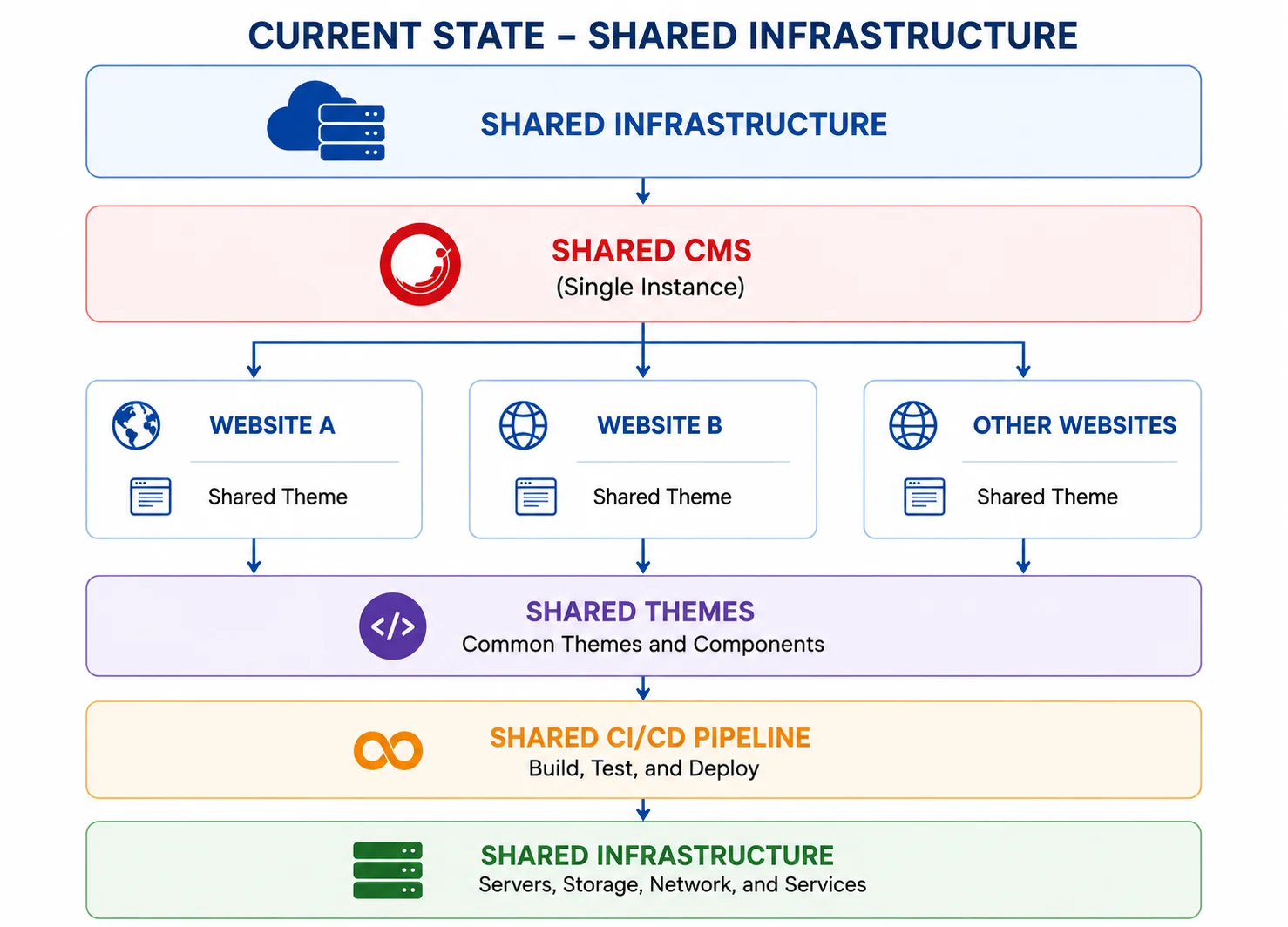
Initially, multiple enterprise websites were hosted and operated through a common technology ecosystem. The model provided efficiency through shared services and reusable frontend components, but over time it created dependencies between the participating websites.
Shared Sitecore CMS
Multiple websites were managed through a shared Sitecore environment. This simplified centralized content management, but it also meant that CMS-level changes required consideration of all dependent websites.
Common Infrastructure
The websites relied on common infrastructure resources. As a result, infrastructure changes, upgrades or scaling activities had to be planned carefully to avoid unintended impact on other applications.
Shared Frontend Components
A common frontend architecture enabled reuse of components and themes across websites. However, website-specific requirements sometimes required additional frontend logic, making it important to identify which components could remain shared and which needed to be separated.
Shared Deployment Pipeline
The shared CI/CD model reduced duplication in the initial architecture, but it also created release dependencies. A deployment intended for one website required additional validation to ensure that other websites were not affected.
Shared Databases and Configurations
Common databases and configuration dependencies increased the complexity of the carve-out. Separating these dependencies required careful analysis of data ownership, application configuration and environment-specific settings.
Shared Codebase
Multiple websites depended on common code and reusable components. While this accelerated development, it also meant that changes made for one platform could require additional regression validation for other dependent websites.
Tight Dependency Between Websites
Shared infrastructure, CMS configurations, frontend components and deployment mechanisms created technical dependencies between websites. These dependencies had to be identified before individual platforms could be separated safely.
Difficult Independent Releases
The shared deployment model made independent release planning more difficult because changes for one platform could require coordination and validation across other platforms.
Risk of Cross-Site Data Exposure
Shared environments and data dependencies created a potential risk of unintended access or migration of content between platforms. Data isolation therefore became a critical requirement of the carve-out.
Shared Deployments Increased Downtime Risk
When multiple applications depend on the same deployment process or infrastructure, a deployment issue can potentially affect multiple websites. Separating the deployment model reduced this shared operational risk.
Scaling One Business Impacted Others
Scaling requirements for one platform could influence shared infrastructure resources. Dedicated environments provided greater flexibility to scale platforms according to their individual requirements.
Higher Regression Testing Effort
Changes to shared components required broader regression testing because the same components could be consumed by multiple websites.
Objective
The primary objective was to transform the shared platform into independently managed enterprise platforms while maintaining business continuity throughout the transition.
The carve-out was designed to establish clear ownership and technical boundaries across the major layers of the platform.
Dedicated Code Repository
Separate repositories were established to provide clearer ownership of platform-specific code and reduce unnecessary dependencies between applications.
Independent Sitecore Instances
Dedicated Sitecore environments were introduced so that individual platforms could manage their content, templates, configurations and CMS-related requirements independently.
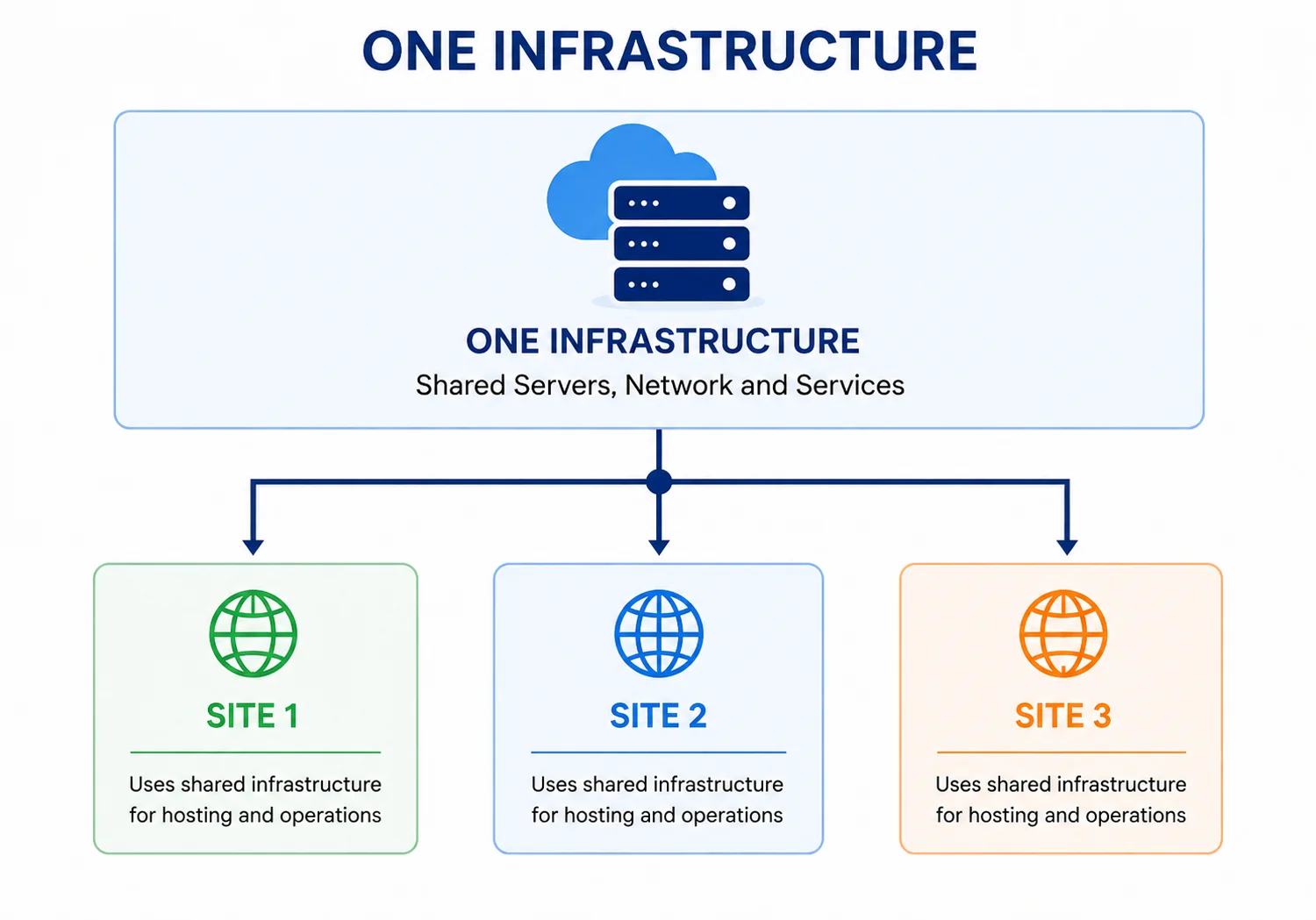
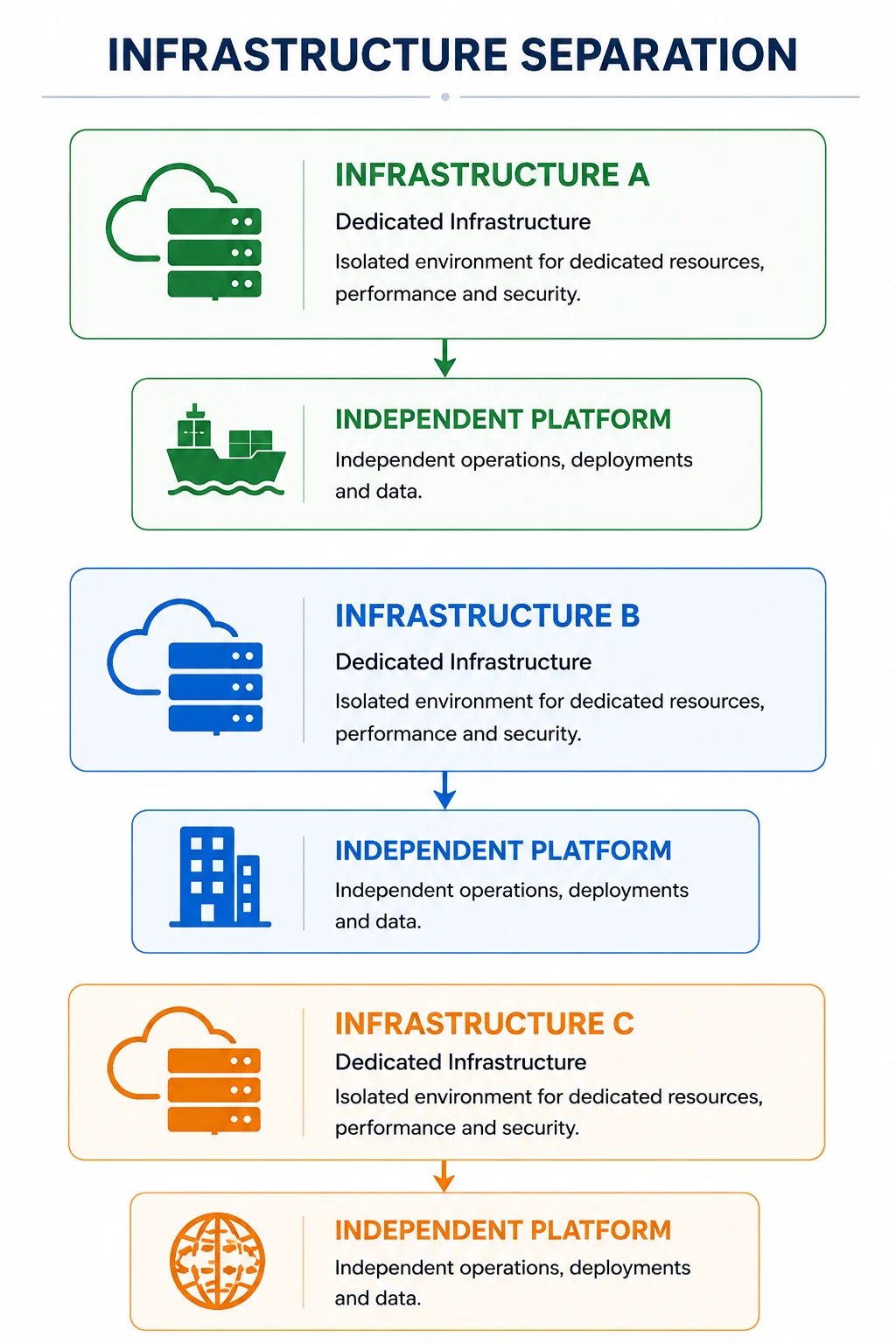
Dedicated Infrastructure
Each separated platform received its own infrastructure resources, reducing dependency on a common hosting environment and providing greater control over scalability and operations.
Independent CI/CD Pipelines
Dedicated pipelines enabled each platform to build, test and deploy independently without requiring deployment activity for unrelated websites.
Frontend Separation
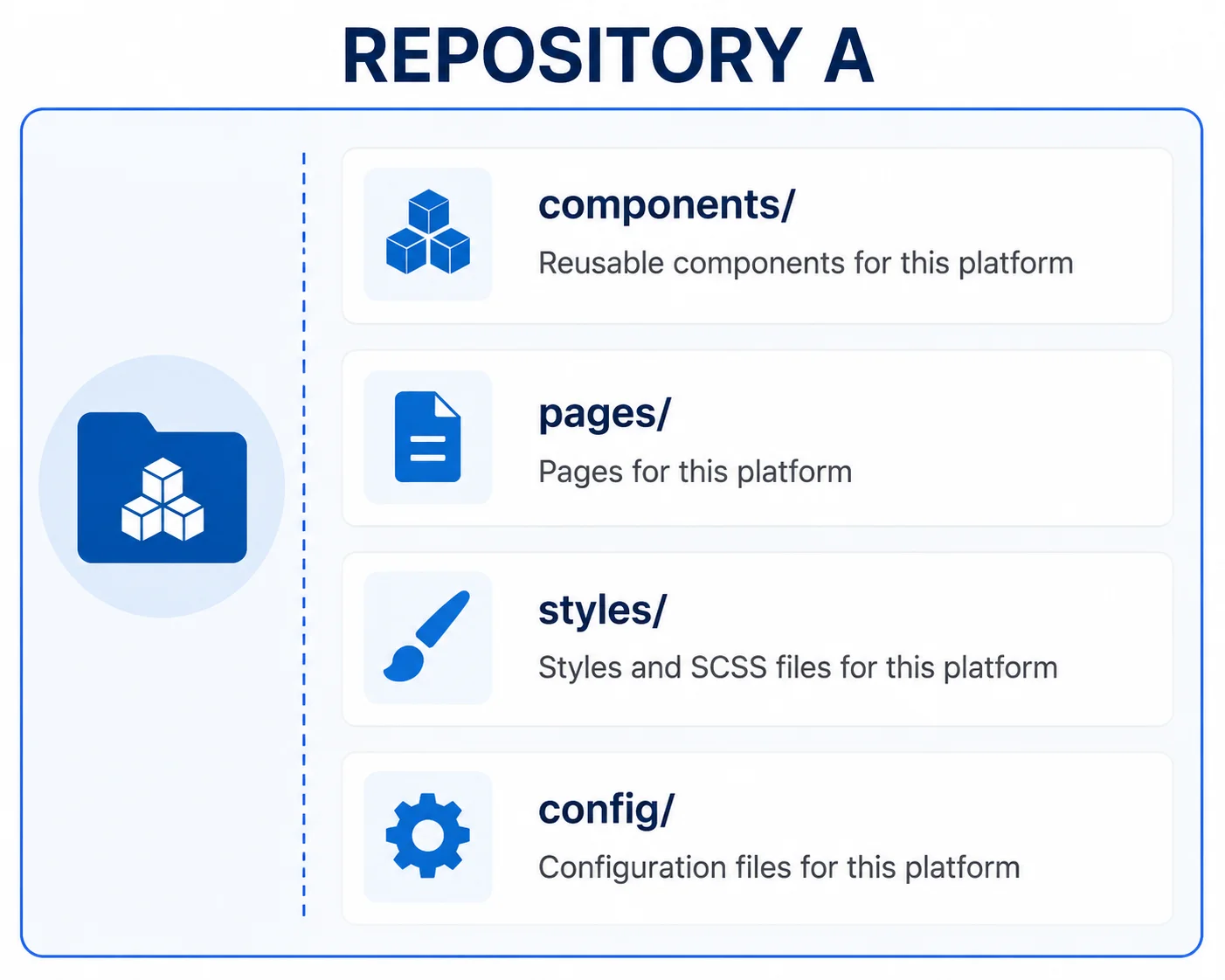
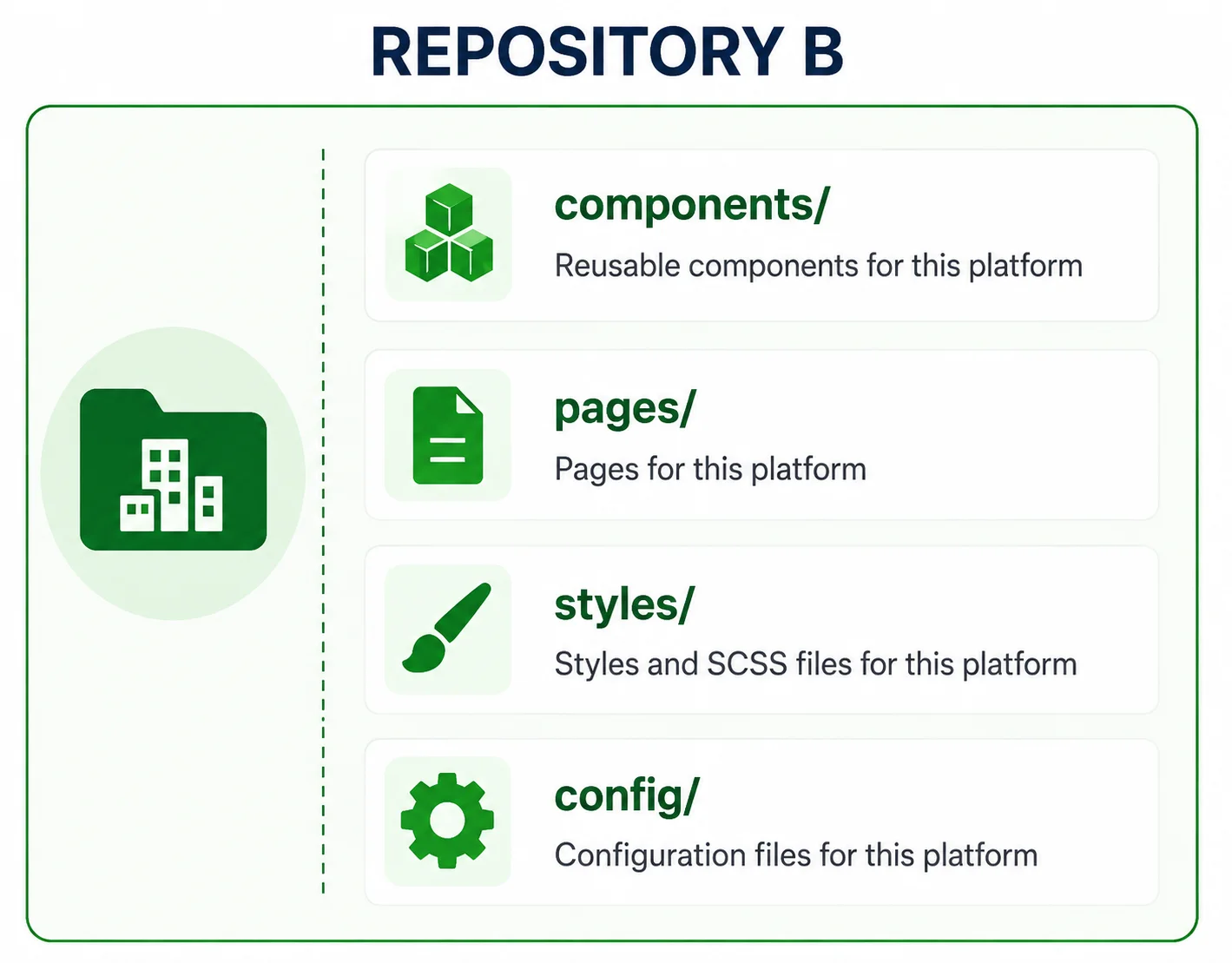
Platform-specific frontend logic, components, pages, styles and configurations were separated from the shared implementation where required.
Secure Data Isolation
Data, media, databases, search indexes and environment-specific secrets were separated to ensure that each platform operated within its own defined data boundary.
Independent Release Cycles
Teams could manage releases according to their own business priorities instead of coordinating every release with other platforms.
Better Scalability
Independent infrastructure and application boundaries provided greater flexibility to scale platforms based on their own traffic and business requirements.
Reduced Operational Risk
Removing unnecessary dependencies reduced the possibility that a change, deployment or infrastructure issue in one platform would affect another.
Solution Strategy
The carve-out was executed through a phased approach. Each phase focused on separating a specific layer of the shared ecosystem while validating dependencies before moving to the next stage.
This approach reduced migration risk and provided a controlled path from the existing shared architecture to the target independent platform model.
The first step was to understand the existing platform in detail before making any architectural changes.
The team performed a structured assessment of the existing environment to identify dependencies across the CMS, frontend, infrastructure, databases, configurations and deployment processes.
Platform Dependency Analysis
Existing relationships between applications, CMS, infrastructure, APIs, databases and deployment mechanisms were analyzed to identify dependencies that could affect the carve-out.
Shared Component Identification
Common frontend components, themes and reusable assets were reviewed to determine which elements were genuinely shared and which were specific to an individual platform.
Content Mapping
CMS content and related structures were reviewed to determine ownership and identify what content needed to move to the new platform.
Asset Inventory
Application assets, media, configurations, repositories and infrastructure resources were inventoried to establish a complete picture of the existing environment.
Configuration Audit
Environment-specific configuration files, connection settings, secrets and application dependencies were reviewed before separation.
Dependency Matrix
Provided visibility into which applications, services and components were dependent on each other.
Migration Plan
Defined the sequence of activities required to move from the shared environment to the independent target environments.
Risk Assessment
Identified potential risks around data, dependencies, infrastructure, deployment and production cutover.
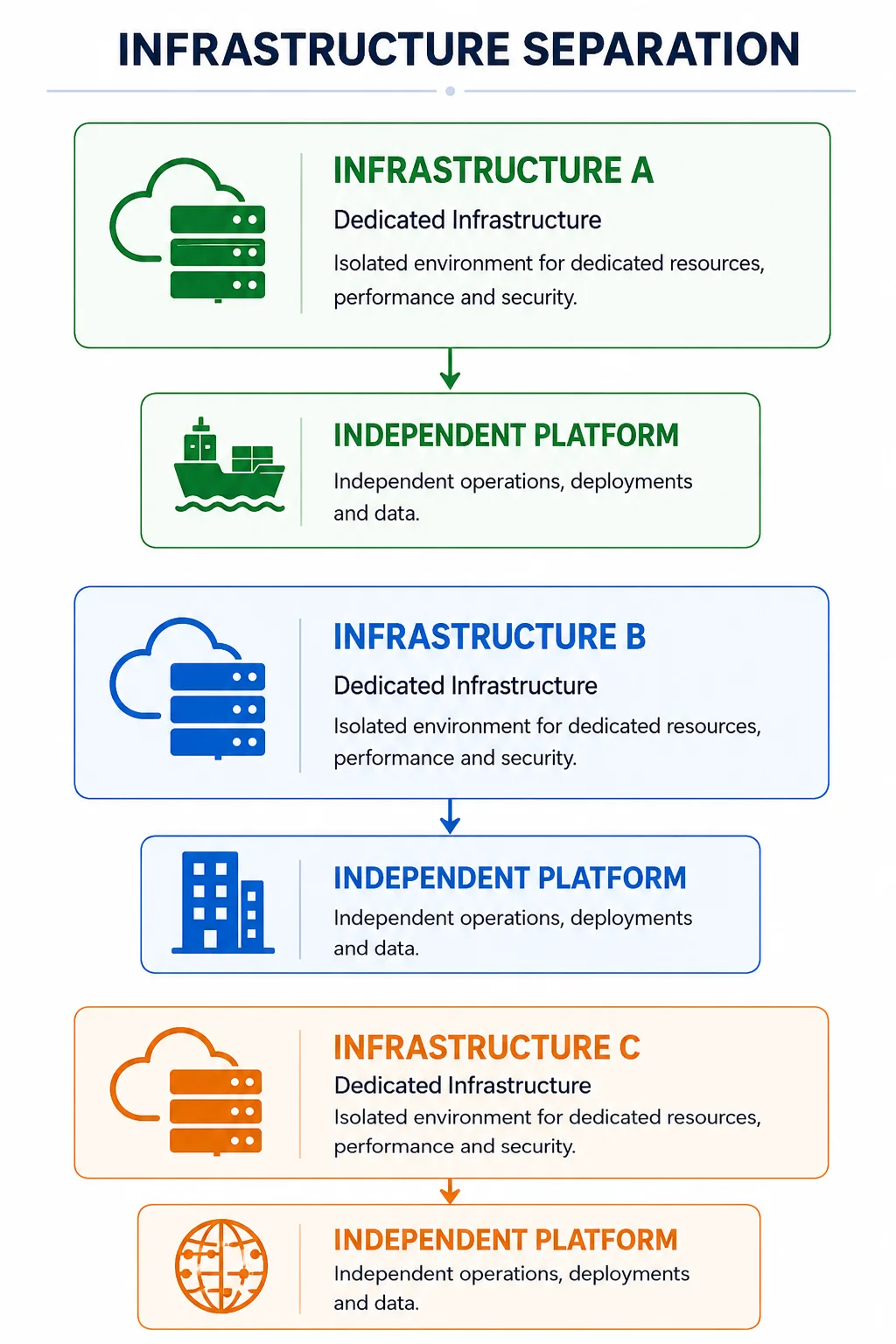
Once the existing dependencies were understood, dedicated infrastructure was provisioned for the platforms being separated.
The infrastructure separation established the foundation for independent application, CMS and deployment environments.
Dedicated Code Repository
Platform-specific code was moved into an independently managed repository to provide clearer ownership and development boundaries.
Dedicated Servers / Application Resources
Independent application resources reduced dependency on shared hosting infrastructure.
Independent Networking
Network-level boundaries were established to ensure that the separated environments could operate independently.
Separate Storage
Platform-specific storage resources were separated to maintain appropriate data boundaries.
Independent Monitoring
Monitoring and operational visibility could be managed according to the requirements of each platform.
Before → After
Before:
Multiple websites dependent on shared infrastructure.
After:
Individual platforms operating within dedicated infrastructure environments.
The CMS layer was one of the most important components of the separation.
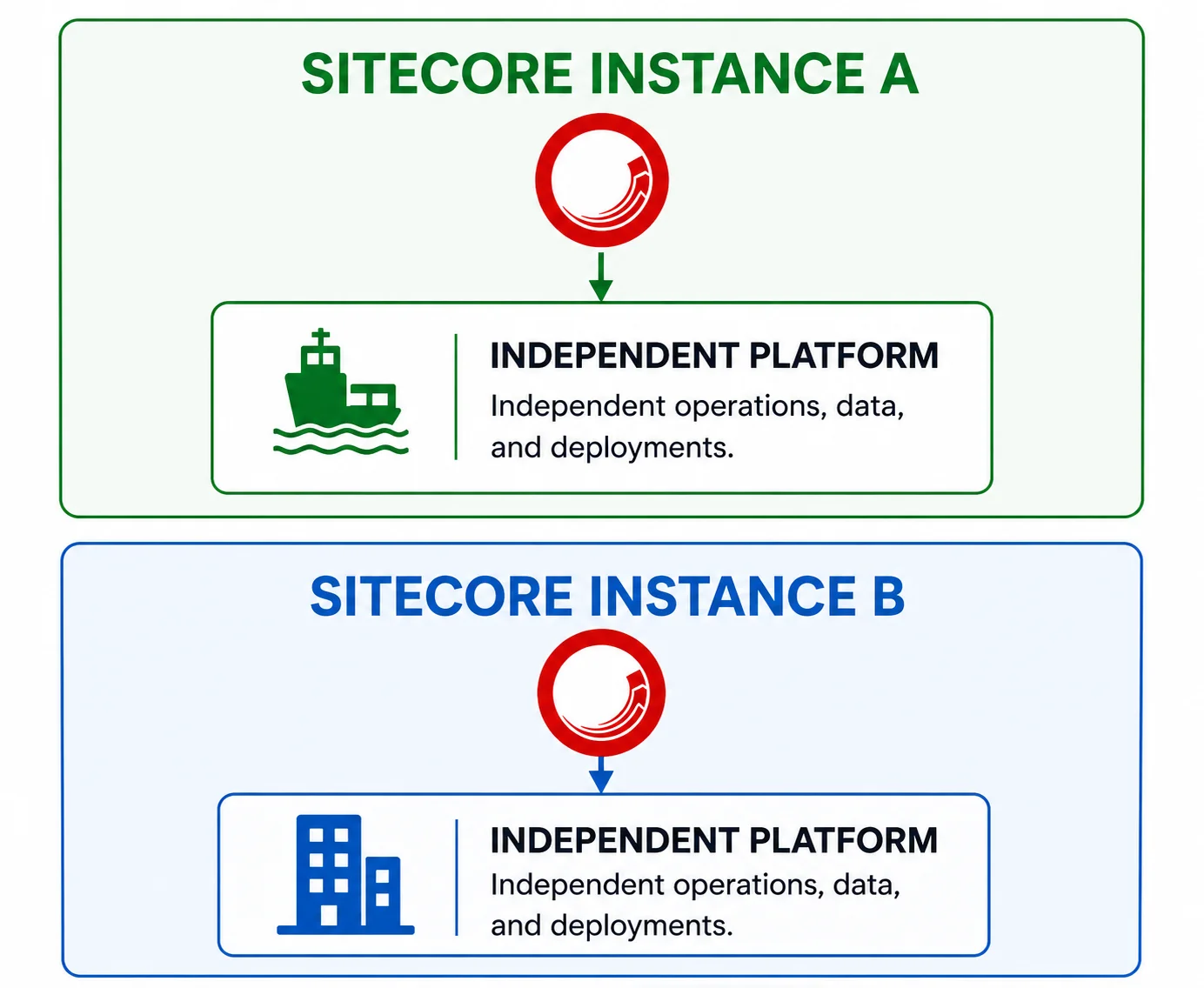
Instead of continuing with a shared Sitecore instance, dedicated Sitecore environments were established for the separated platforms.
This required analysis and separation of CMS-related configurations, content structures, templates, media, databases and environment-specific settings.
Independent Content Management
Each platform could manage its own content without unnecessary dependency on other websites.
Easier Upgrades
CMS upgrades and configuration changes could be planned independently based on the requirements of each platform.
Better Security
Dedicated CMS environments reduced the possibility of unintended cross-platform access.
Reduced Operational Complexity
Platform-specific CMS ownership simplified troubleshooting, maintenance and release planning.
Before: Shared Sitecore environment supporting multiple websites.
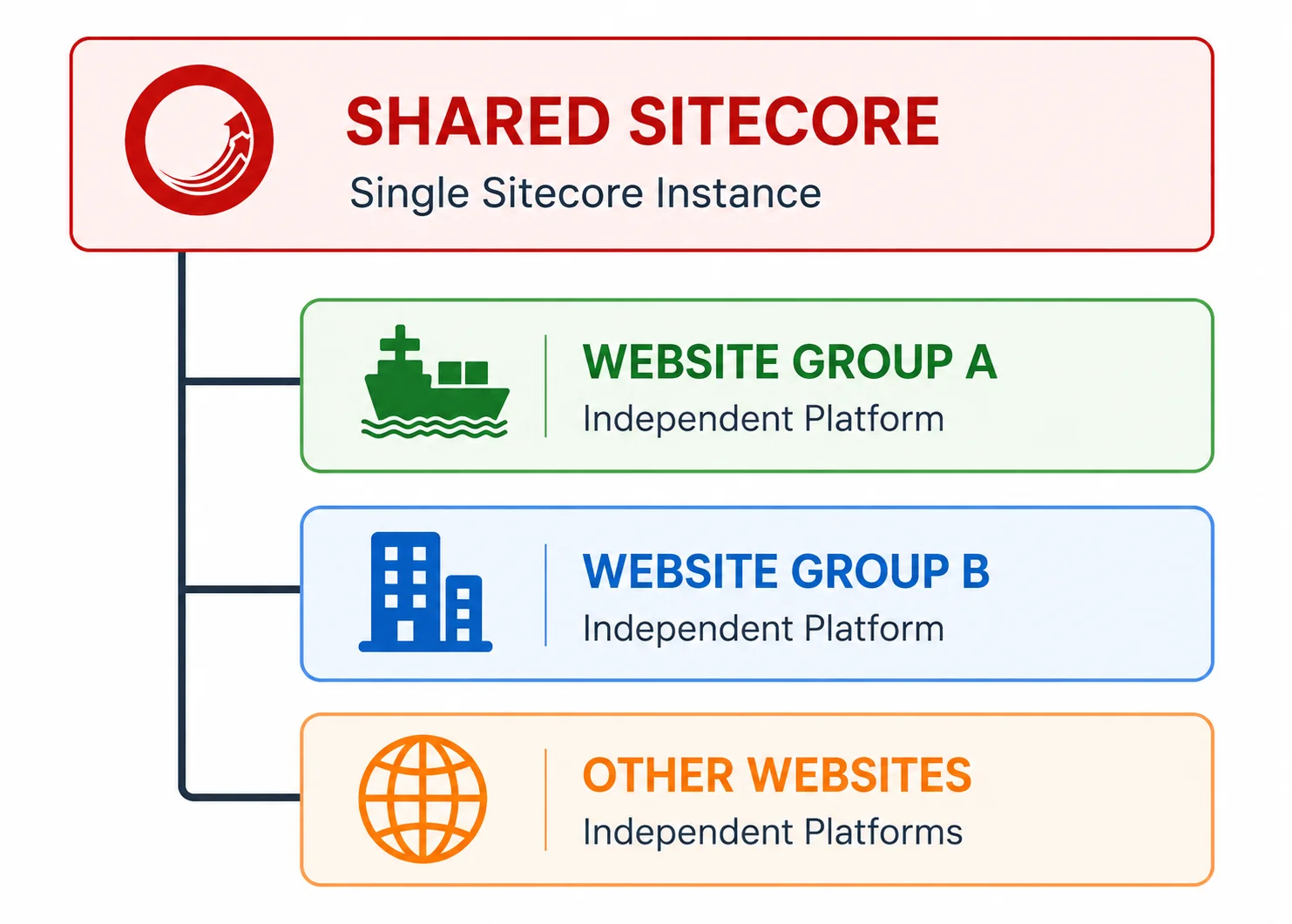
After: Dedicated Sitecore instances supporting independent platforms.
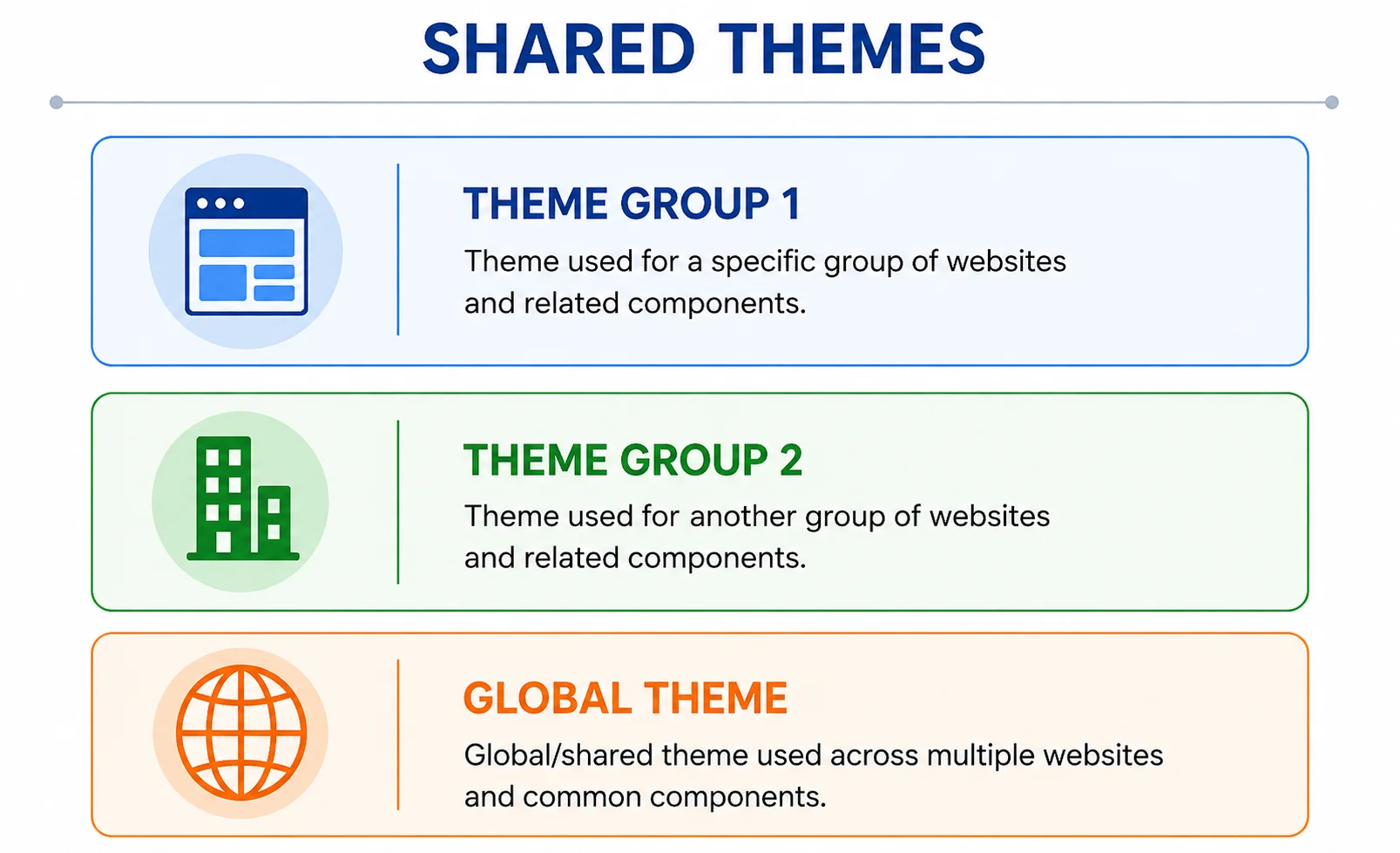
Originally, the frontend followed a shared theme and component-based approach. This provided reuse and consistency across websites but also created dependencies between applications.
Large portions of the frontend code were shared, meaning that changes to common components could require regression testing across multiple websites.
As part of the carve-out, the frontend architecture was reviewed to identify platform-specific logic and separate it from the shared implementation.
Separation activities included
The objective was not to duplicate everything blindly, but to create clear ownership boundaries while preserving useful reuse where it did not create unwanted coupling.
Independent Feature Development
Teams could develop platform-specific features without introducing unnecessary changes into other applications.
Faster Releases
Frontend changes could be tested and released according to the platform’s own release cycle.
Reduced Regression
Separating platform-specific logic reduced the scope of regression testing required for unrelated websites.
Cleaner Code Ownership
Teams gained clearer ownership of components, pages, styles and configuration
After carve-out
The existing shared deployment model was replaced with independent CI/CD pipelines for the separated platforms.
The objective was to ensure that each application could follow its own build, validation, deployment and rollback process.
Separate Databases
Platform-specific databases were established to maintain clear data ownership and prevent unnecessary cross-platform dependencies.
Independent Media Assets
Media and digital assets were separated according to platform ownership.
Separate Search Indexes
Search-related data was isolated so that one platform would not unintentionally expose content belonging to another.
Environment-Specific Secrets
Secrets and sensitive configuration values were maintained separately for each environment.
Access Control Segregation
Access permissions were reviewed and separated according to the target platform boundaries.
Validation During Migration
Migration activities were validated to confirm that the correct data was transferred to the appropriate environment.
Content Verification
Content was reviewed after migration to ensure completeness and correctness.
Security Testing
Testing was performed to validate that platform boundaries were maintained and that unintended data exposure did not occur.
This approach ensured that each platform operated with a clearly defined data boundary.
Migration Approach
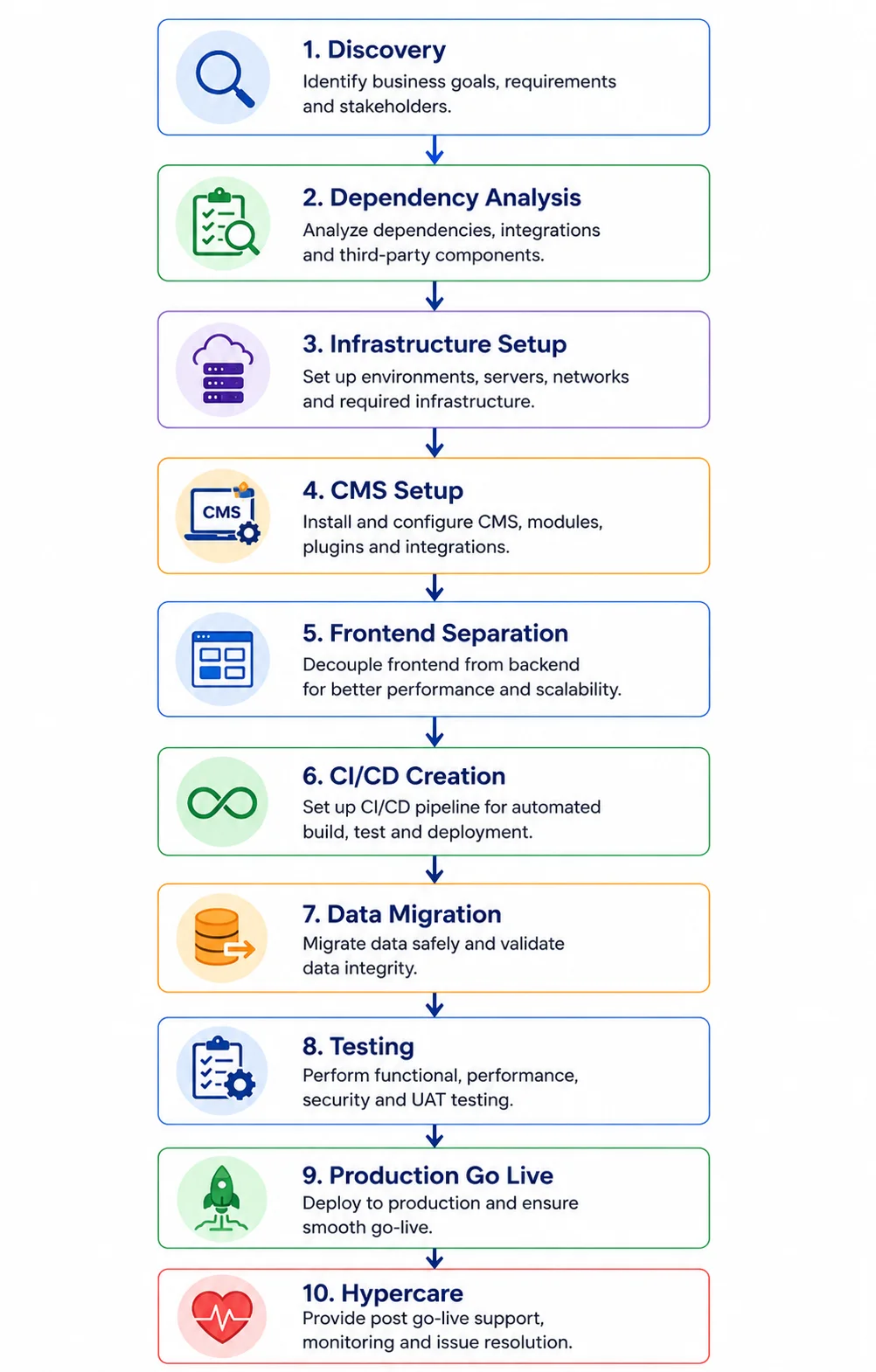
The migration followed a controlled, phased sequence rather than performing all separation activities simultaneously.
The overall flow was:
Discovery → Dependency Analysis → Infrastructure Setup → CMS Setup → Frontend Separation → CI/CD Creation → Data Migration → Testing → Production Go-Live → Hypercare
Discovery
The existing architecture, applications, integrations and dependencies were assessed to establish a clear understanding of the platform.
Dependency Analysis
Dependencies across infrastructure, Sitecore, frontend, databases, configurations and deployment pipelines were documented and reviewed.
Infrastructure Setup
Target infrastructure was provisioned before application migration so that the destination environment was available for validation.
CMS Setup
Dedicated Sitecore instances and required configurations were established for the separated platforms.
Frontend Separation
Platform-specific frontend components, pages, styles and configurations were separated from the shared implementation.
CI/CD Creation
Independent pipelines were created and validated to support platform-specific build and deployment processes.
Data Migration
Required content, media, database records and configuration data were migrated carefully into the target environment.
Testing
Functional, integration, regression, deployment and security validation were performed before production cutover.
Production Go-Live
The separated platform was moved to production through a controlled deployment and cutover process.
Hypercare
Post-production monitoring was performed to identify and resolve any issues that became visible after real production traffic and usage.
Risks & Mitigation
A platform carve-out introduces risks because the original architecture contains dependencies across multiple technical layers.
| Risk | Mitigation |
|---|---|
| Data Leakage |
Complete environment isolation, controlled migration and post-migration validation were used to ensure that platform-specific data remained isolated. |
| Downtime | Migration was performed through a phased approach supported by production validation and a rollback plan. |
| Broken Dependencies | Dependencies were mapped before migration and validated during the separation process. |
| Configuration Drift |
Configuration was maintained through version control and environment-specific management to reduce differences between environments. |
| Deployment Failure |
Independent CI/CD pipelines were tested before production deployment to validate the complete build and deployment process. |
| Content Loss |
Data backups, controlled migration and post-migration content verification were used to validate content completeness. |
Results
The carve-out resulted in a more independent and manageable platform architecture.
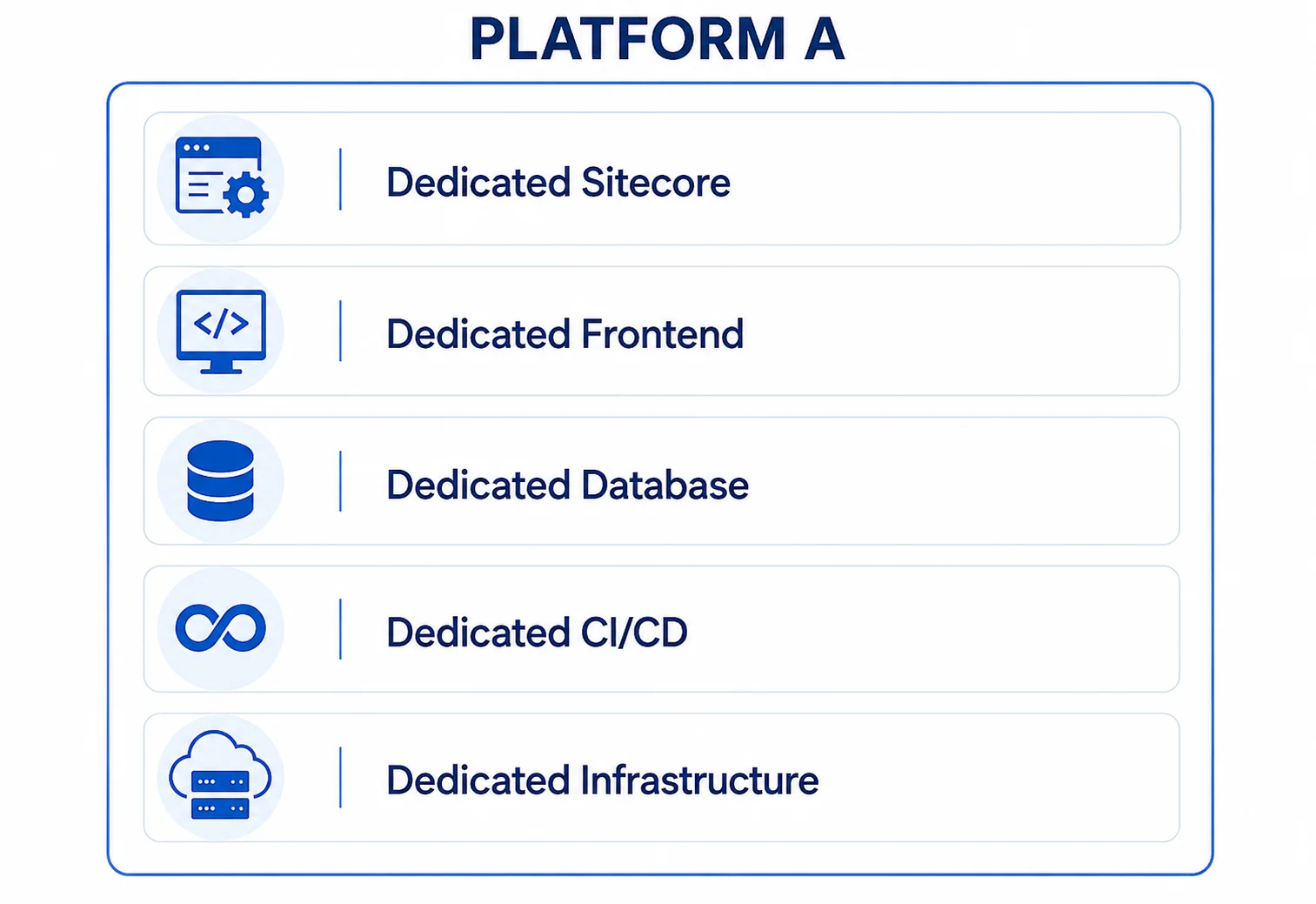
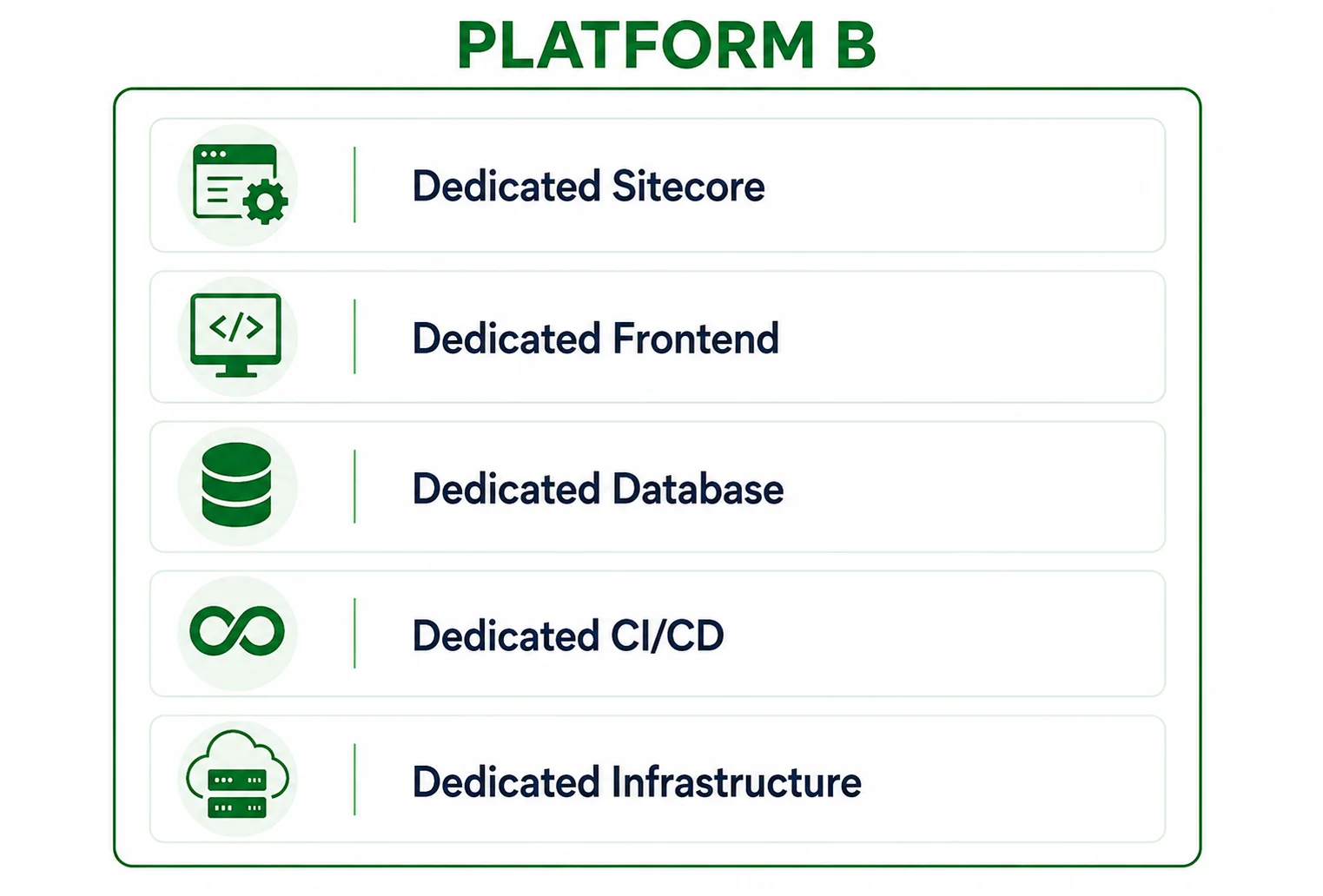
Each platform could now be deployed independently, reducing coordination requirements between different websites.
Platform-specific teams could follow their own release schedules without waiting for unrelated website changes.
Dedicated infrastructure provided greater flexibility to scale individual platforms according to their own business and technical requirements.
Separating platform-specific code and components reduced the scope of regression testing required for unrelated platforms.
Dedicated infrastructure, CMS environments, databases and access controls provided stronger boundaries between platforms.
Independent components and configurations simplified troubleshooting, upgrades and ongoing maintenance.
Clearer boundaries allowed teams to take ownership of their respective frontend, CMS, infrastructure and deployment processes.
Developers could work on platform-specific requirements with fewer dependencies on unrelated applications and release schedules.
The overall outcome was a transition from a shared and tightly coupled environment to a more modular and independently operated platform architecture.
Key Learnings
Understanding the relationships between applications, CMS, infrastructure, databases and frontend components before migration helps identify hidden dependencies early and reduces rework.
Having the target infrastructure ready before application migration provides a stable destination environment and allows technical validation to happen progressively.
Independent pipelines are an important part of platform independence. Without deployment separation, application-level independence can still remain constrained by shared release processes.
Clearly separating platform-specific frontend logic from reusable components makes future development easier and reduces unnecessary coupling between applications.
A successful carve-out requires validation across more than just the frontend. CMS, integrations, databases, configurations, deployment processes and security boundaries must also be tested.
Data isolation should be considered throughout the entire migration lifecycle—from discovery and mapping through migration, validation and production deployment.
A carve-out is successful only when technical separation is achieved without creating unacceptable disruption to the business or end users.
Architecture Comparison
Before
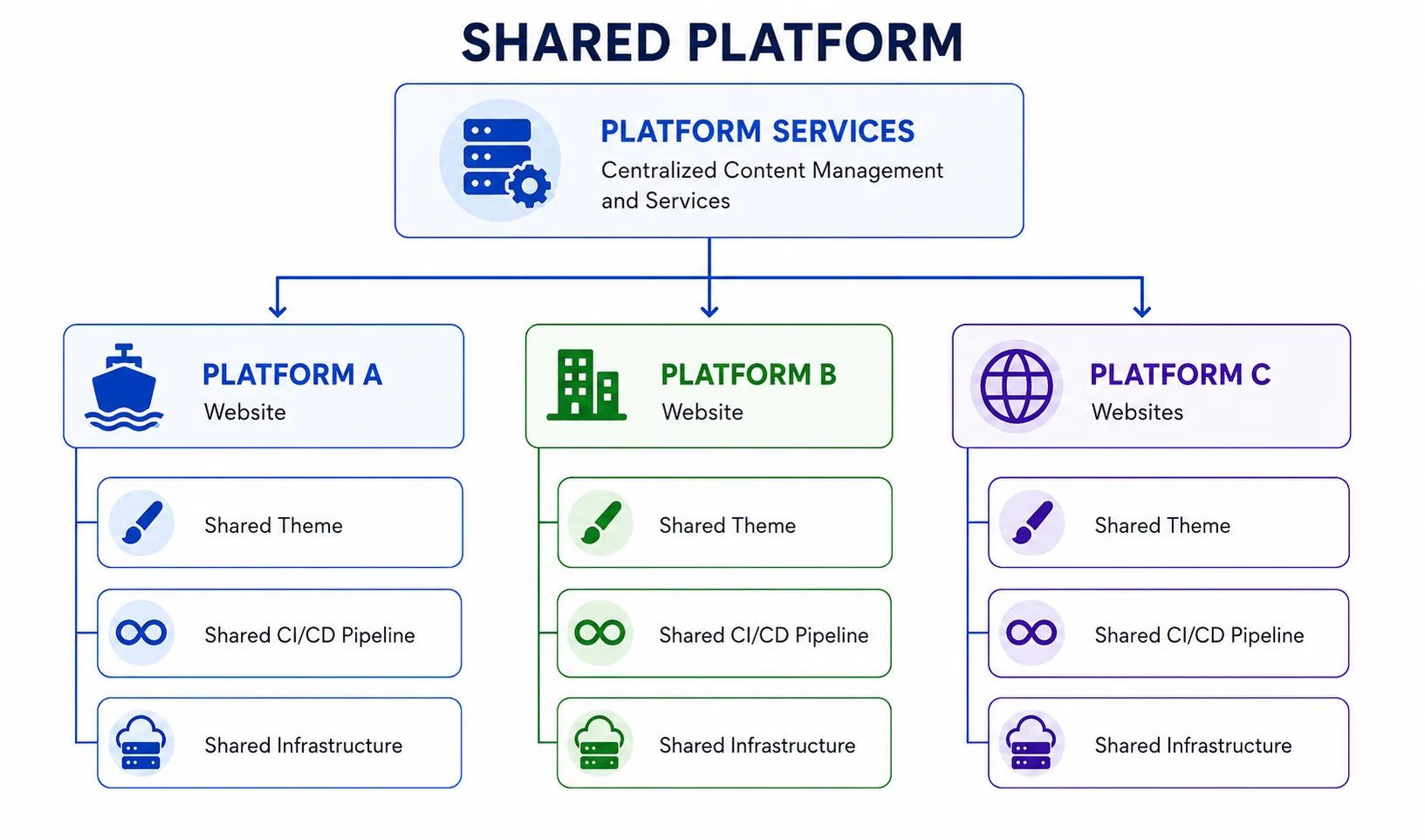
After
Conclusion
The Enterprise Platform Carve-Out transformed a tightly coupled shared digital ecosystem into independently managed enterprise platforms.
The transformation required coordinated separation across infrastructure, Sitecore instances, frontend applications, repositories, deployment pipelines, databases, configurations and data.
The key challenge was to achieve technical independence without disrupting existing business operations. A phased approach allowed dependencies to be identified, target environments to be established, applications and data to be migrated, and each layer to be validated before production cutover.
By introducing dedicated infrastructure, isolated CMS environments, platform-specific frontend implementations, independent CI/CD pipelines and controlled data boundaries, the organization achieved greater scalability, improved security, faster release cycles and stronger operational resilience.
The resulting architecture also provided clearer ownership. Individual platforms could now evolve according to their own business requirements without being unnecessarily constrained by changes taking place elsewhere in the shared ecosystem.
Most importantly, the carve-out established a more sustainable foundation for future growth. New features, infrastructure changes, upgrades and deployments could be planned and executed at the platform level, while the risk of unintended cross-platform impact was significantly reduced.
The case study demonstrates that an enterprise platform carve-out is not simply a migration of applications or infrastructure. It is a structured transformation involving architecture, application code, CMS, data, infrastructure, deployment processes, security and operational ownership.
The final outcome was a move from a shared, tightly coupled platform model toward a more modular, isolated and independently manageable enterprise architecture.
Partnering with the world's leading AI companies to deliver cutting-edge solutions and drive innovation across industries.
Thoughtful AI platform with enterprise-grade security, seamless integrations, and intelligent automation
Get a Quote






Collaborate with a globally recognized, award-winning development team.
Share a few details about your idea, and our team will come back with technical insights, timelines, and next steps.